Textiles: Layering Comfort
A moody, minimalist space runs the risk of feeling cavernous or sterile if it lacks tactile depth. Textiles are the acoustic and visual dampeners of a well-curated habitat. They absorb echoes, break up rigid geometric lines, and invite physical interaction.
The Weight of Fabric
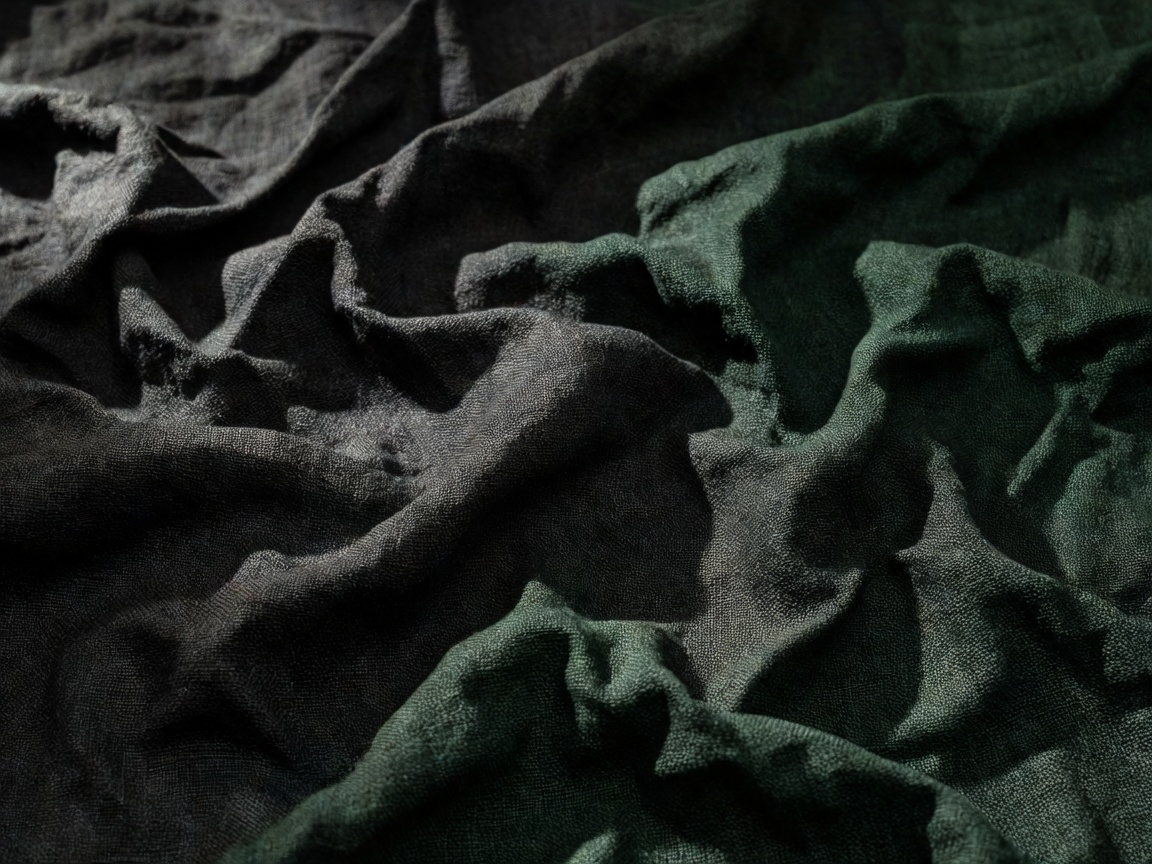
In our pursuit of the "pavilion" feel—a safe, enclosed shelter—the weight of the fabrics chosen is just as important as their visual appeal. Heavyweight European linens, thick bouclé, and densely woven wools provide a necessary gravity.
Acoustic Dampening
Modern homes often feature hard surfaces: concrete floors, extensive glazing, and flat plaster walls. These materials reflect sound aggressively, contributing to ambient stress. By introducing heavy drapery, thick area rugs, and upholstered partitions, you radically alter the auditory experience of a room.
Curating Your Palette
Adhering to our dark editorial aesthetic, textile choices should lean towards natural, unbleached tones darkened by organic dyes. Think deep charcoals, slate, moss greens, and raw umber. Avoid synthetic sheen; opt instead for the matte irregularities found in hand-loomed materials.